Fit with Matthew — Strength | Wellness
Coaching / Fascia & movement

DRAFT / MY TRAINING APPROACH

Your body works
in connections.

How I use Anatomy Trains® and fascia lines to help you understand your movement, train with purpose, and become more independent.

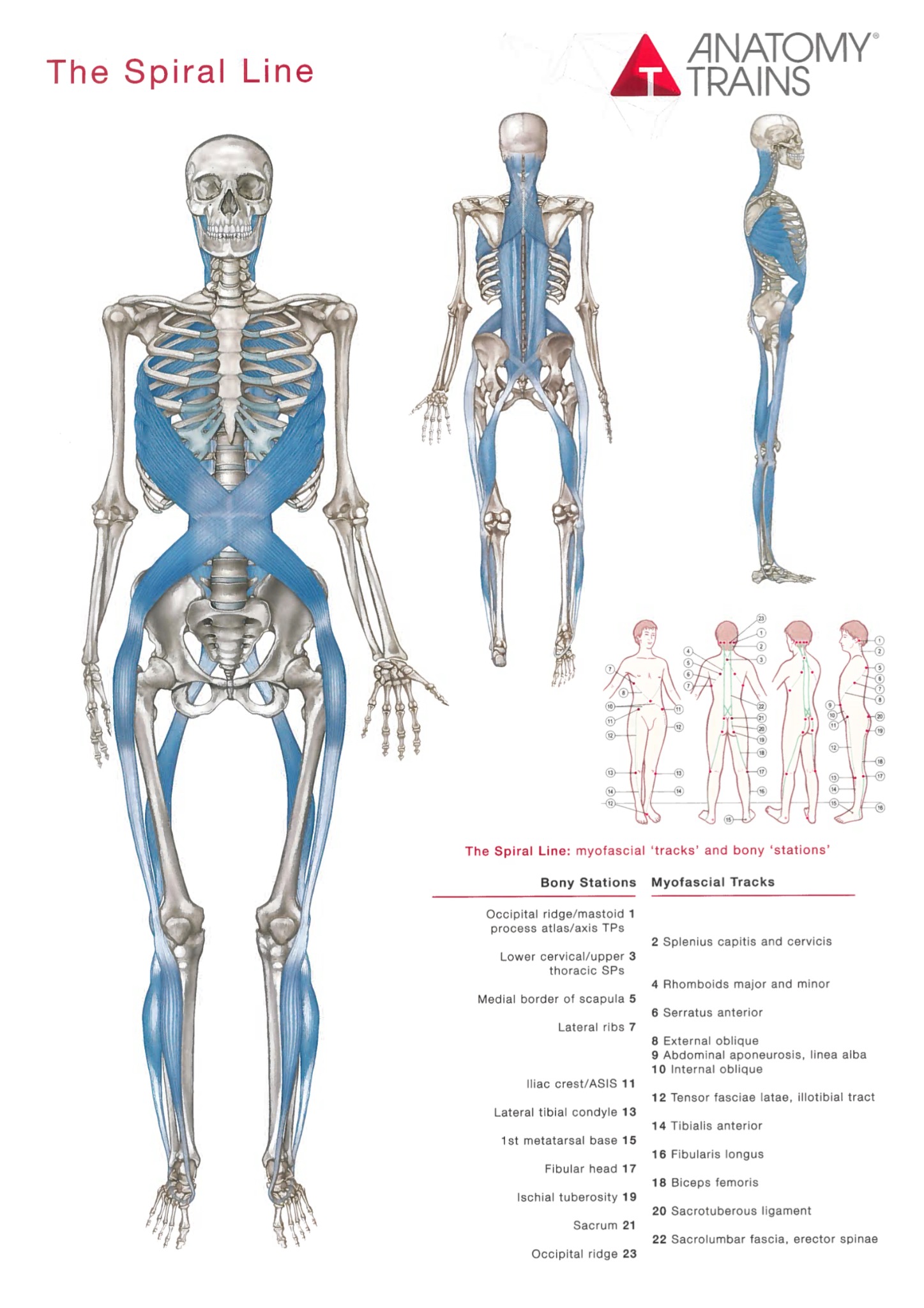
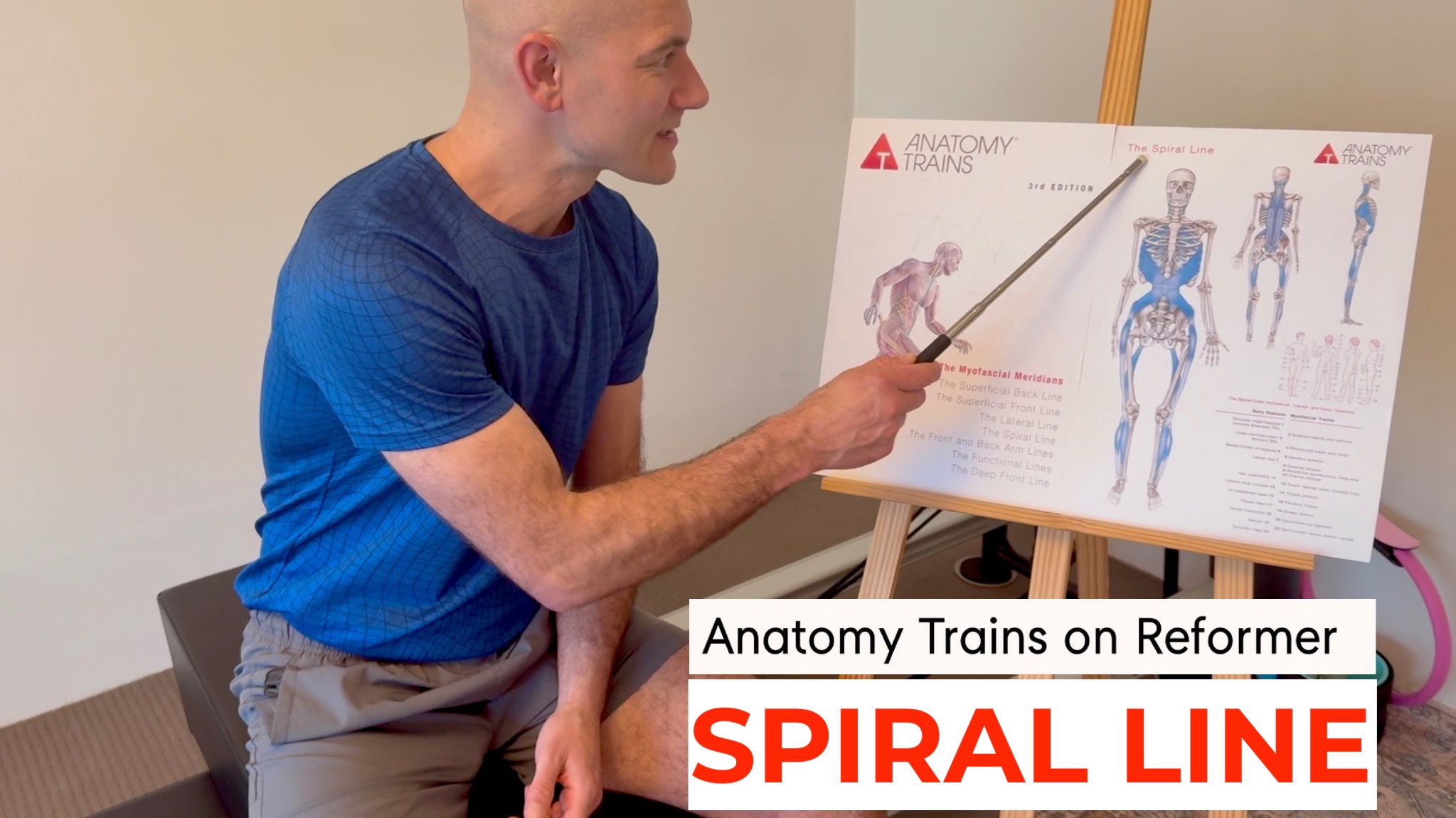
Matthew teaching the Anatomy Trains Spiral Line using illustrated posters on an easel
Teaching the Spiral Line and exploring its application to Pilates. Anatomical illustrations: Anatomy Trains®.

BEYOND INDIVIDUAL MUSCLES

A map for
connected movement.

When you walk, reach, squat, or turn, several parts of your body work together. In training, I pay attention to those relationships as well as the individual muscles doing the work.

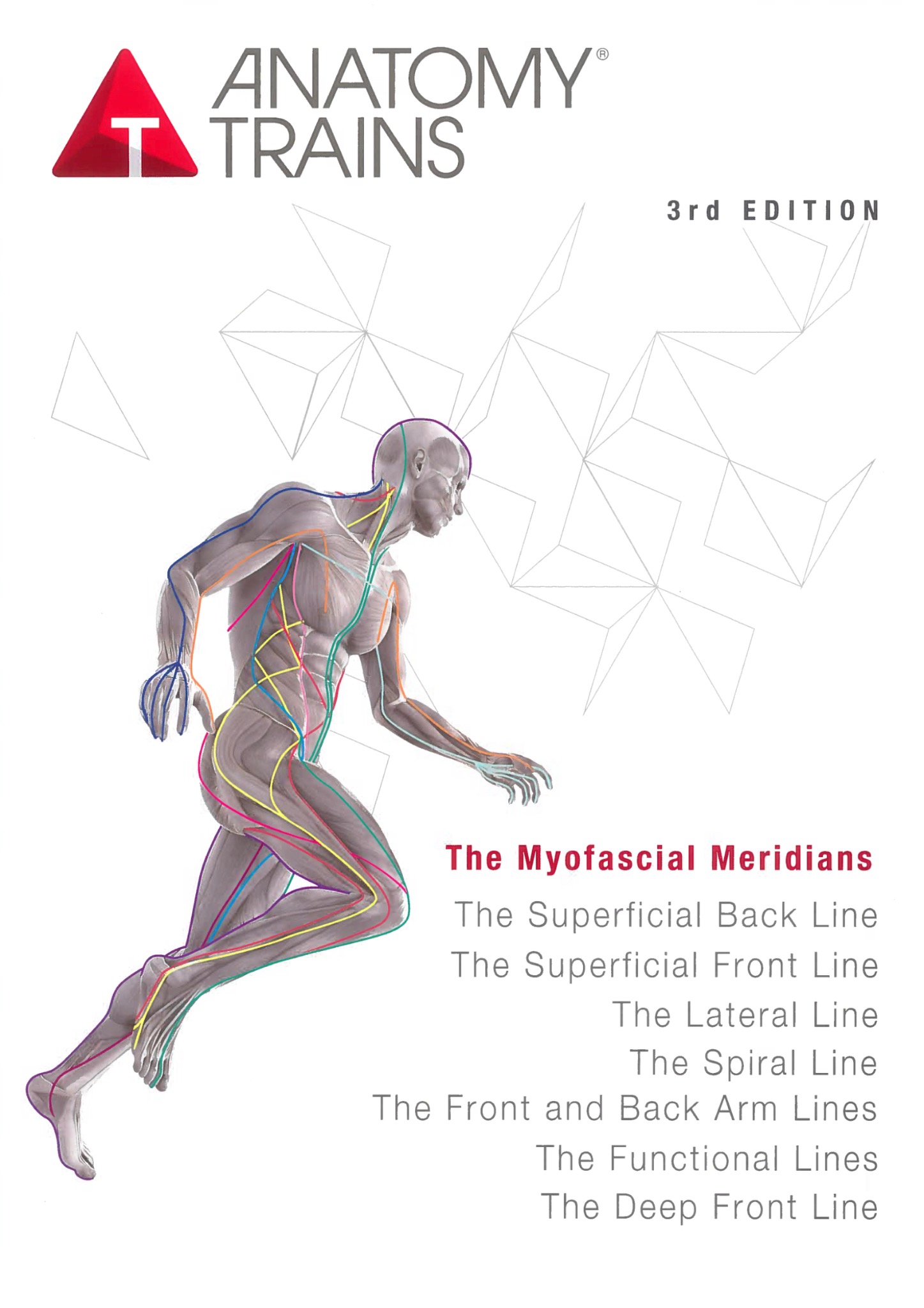
Anatomy Trains, developed by Thomas Myers, maps proposed pathways of connected muscle and fascia called myofascial meridians. Fascia is connective tissue that surrounds and links structures throughout the body. The lines offer a way to think about how different regions relate during movement.

I use this map to ask better questions about how you move, then choose and adapt exercises around your goals and your response.

Explore the Anatomy Trains model ↗
Anatomy Trains poster: The Myofascial Meridians
The Myofascial Meridians · Image credit: Anatomy Trains®. Select image to view full size.

WHAT THIS MEANS IN A SESSION

Observe. Explore.
Learn. Progress.

The point is to help you understand your body and build a training strategy you can use.

  1. Look at the movement.

    I watch how you bend, reach, rotate, and balance. Where do you have options? Where does a movement feel restricted or hard to control?

  2. Consider the connections.

    I look at how your feet, hips, trunk, and shoulders contribute together. A stiff-feeling area is a starting point for exploration, rather than a reason to assume one tissue is the cause.

  3. Choose and practise.

    We may combine strength work, Pilates, mobility, balance, and rotation. I explain what we are practising, adjust the exercise, and check how it feels and how well you can perform it.

  4. Build your independence.

    You learn the cues and exercise options that work for you. We revisit them as your strength, confidence, and goals change, building a long-term plan for staying active.

FROM THE MAP TO THE MOVEMENT

Lines I consider.
Skills we practise.

These examples show how I might use the model in exercise selection. Each movement involves more than one line, joint, or muscle group.

01 / SUPERFICIAL BACK LINE

Bending and lengthening.

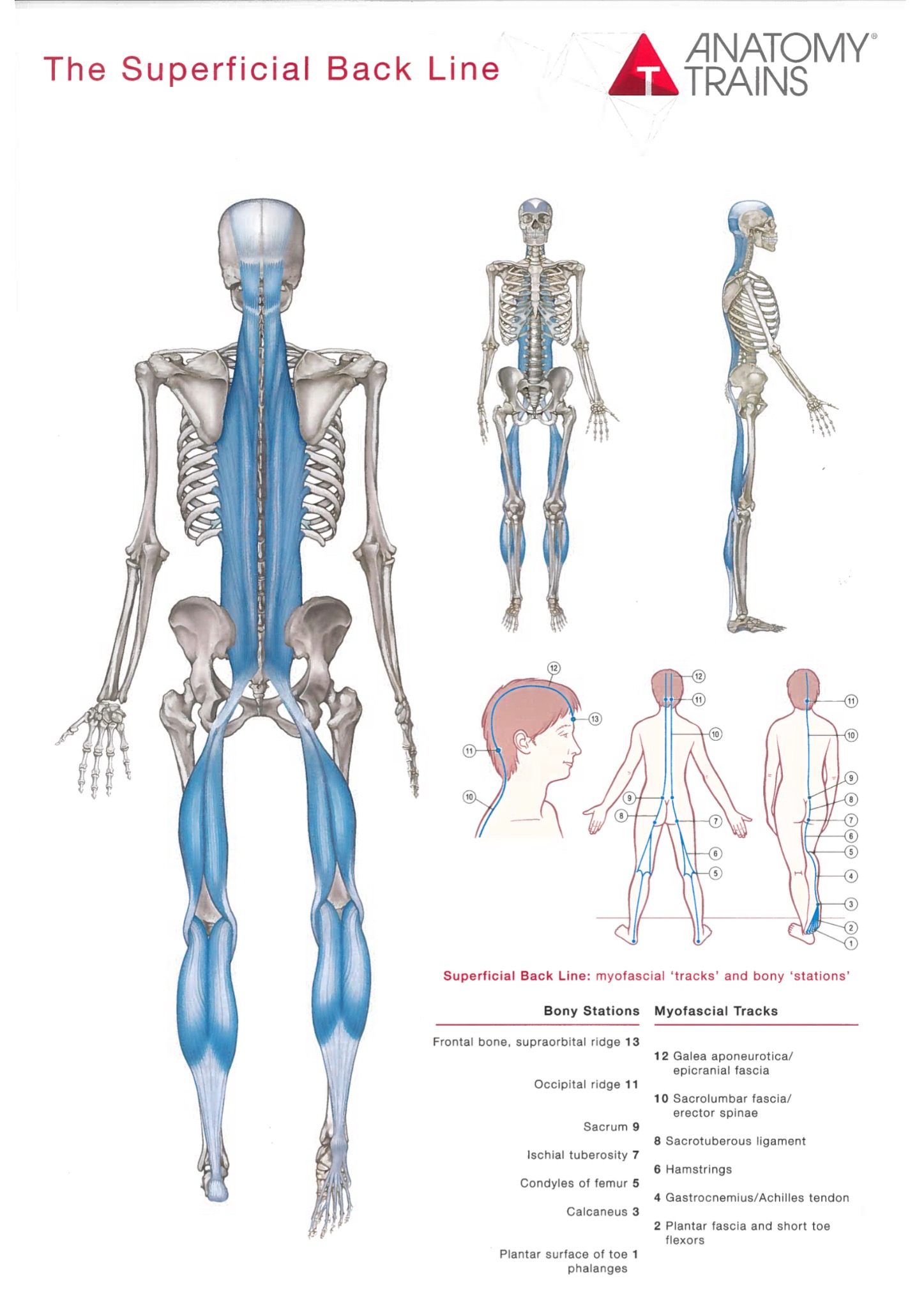
The model traces connections along the back of the body, including the sole of the foot, calf, hamstrings, and back. It prompts me to observe how you organise a forward bend.

In training: hip-hinge practice, controlled spine rolls, and appropriate posterior-chain strength work.

02 / LATERAL LINE

Balance and side support.

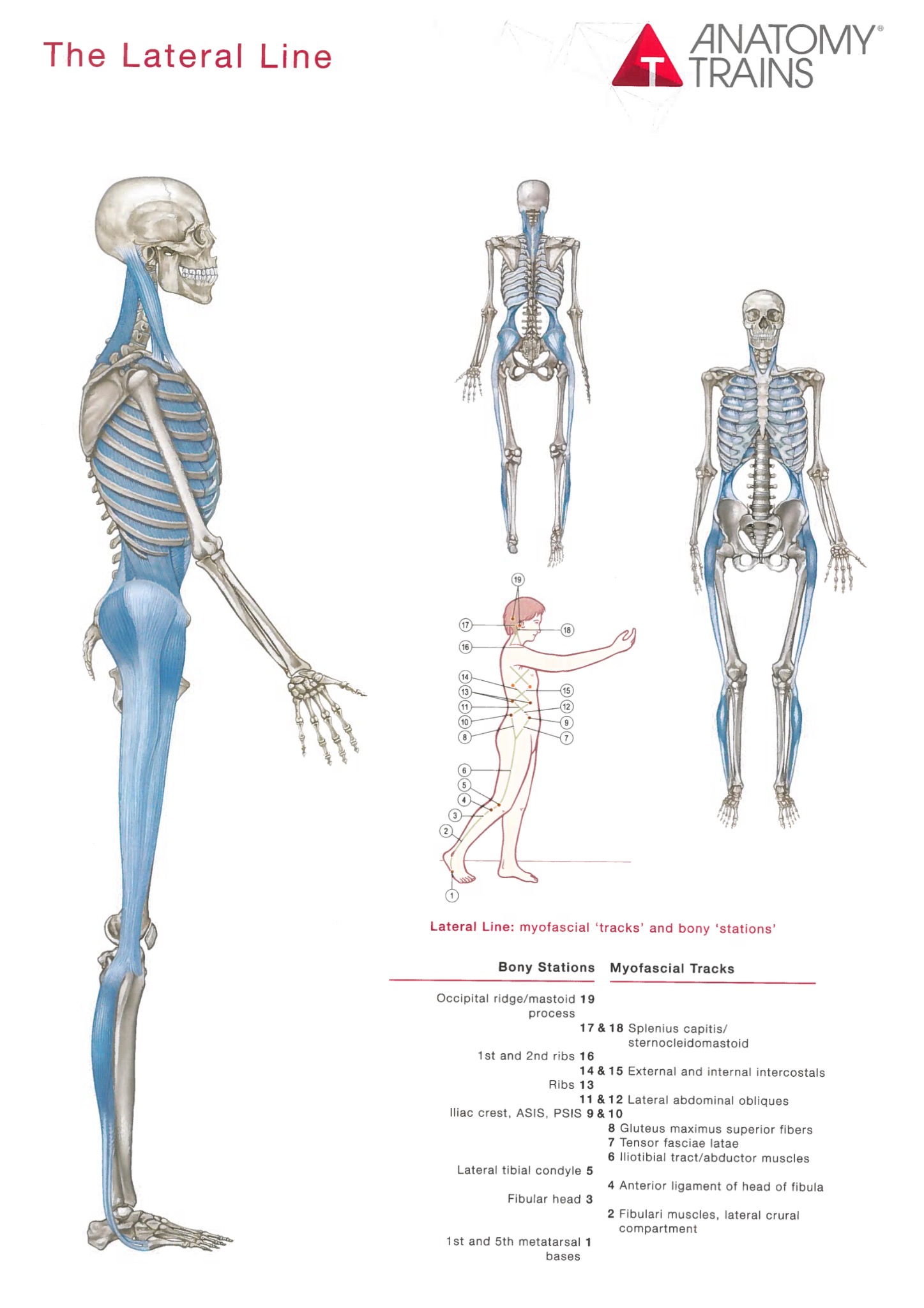
The lateral line follows the sides of the body. I use that perspective when observing how you shift weight or maintain control on one leg.

In training: side steps, lateral lunges, side planks, and supported single-leg balance.

03 / SPIRAL LINE

Turning with control.

The spiral line wraps around the body in the Anatomy Trains model. It provides a prompt to explore how your trunk, pelvis, and legs coordinate during rotation.

In training: standing spirals, reaching patterns, and controlled rotational exercises.

04 / FUNCTIONAL LINES

Connecting shoulder and hip.

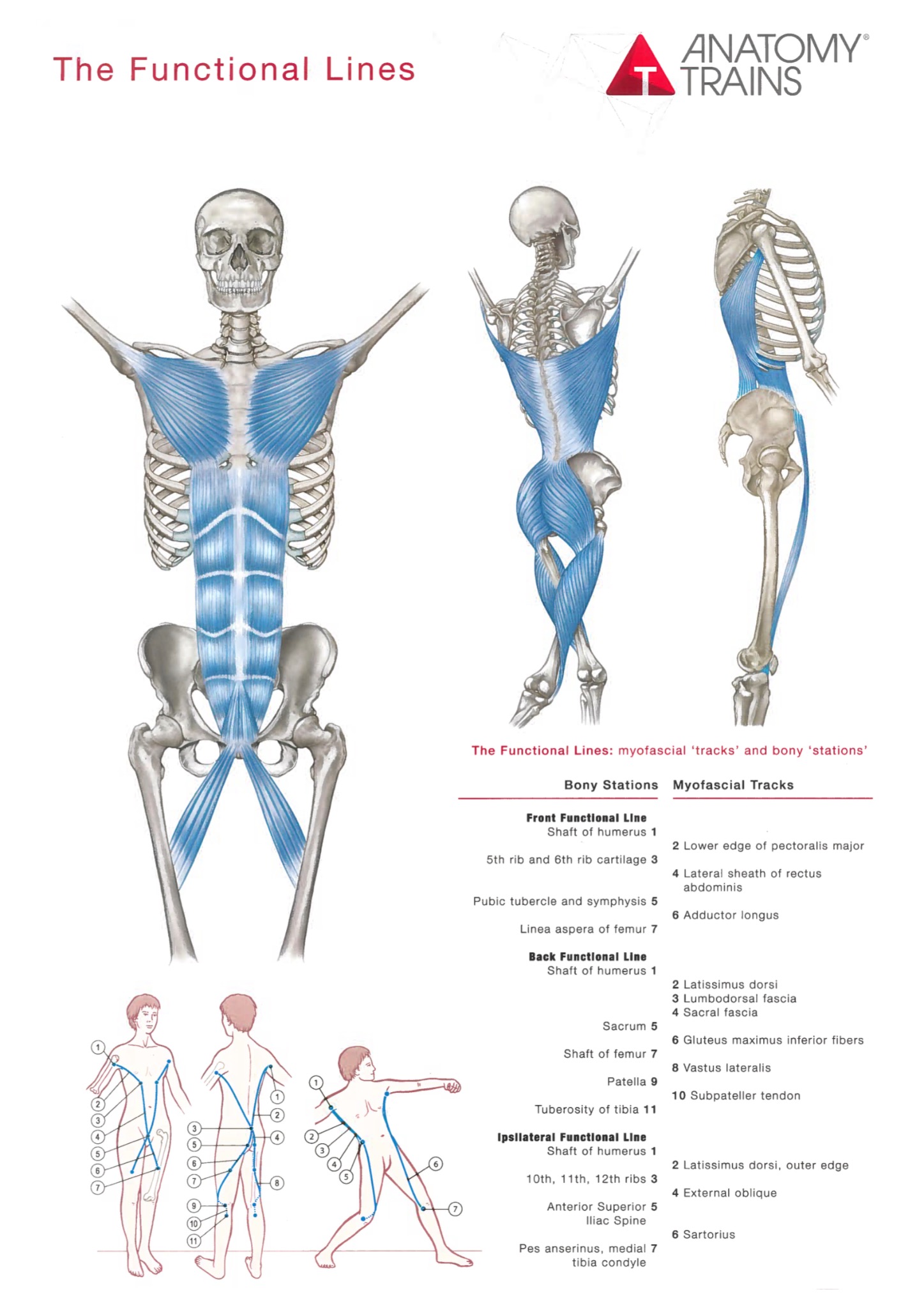
The functional lines describe diagonal relationships between the upper body and the opposite side of the pelvis and leg.

In training: split-stance cable work, cross-body reaches, and coordinated pulling or pressing patterns.

Anatomy Trains poster: Functional Lines
Functional Lines · Image credit: Anatomy Trains®. Select image to view full size.

A PRACTICAL EXAMPLE

A cable exercise.
A whole-body task.

In a split-stance cable exercise, I might ask you to notice your foot pressure, your balance, and how your ribs and pelvis move as you pull or press.

We can change the stance, range, or resistance to explore a different challenge. The aim is a movement you can understand, control, and progress.

This is where the fascia-line perspective fits into my broader approach: it helps guide observation, alongside strength, mobility, coordination, your training history, and what you want to achieve.

Explore 1-on-1 personal training →

EXPLORE THE ANATOMY TRAINS

Follow the lines.
See the connections.

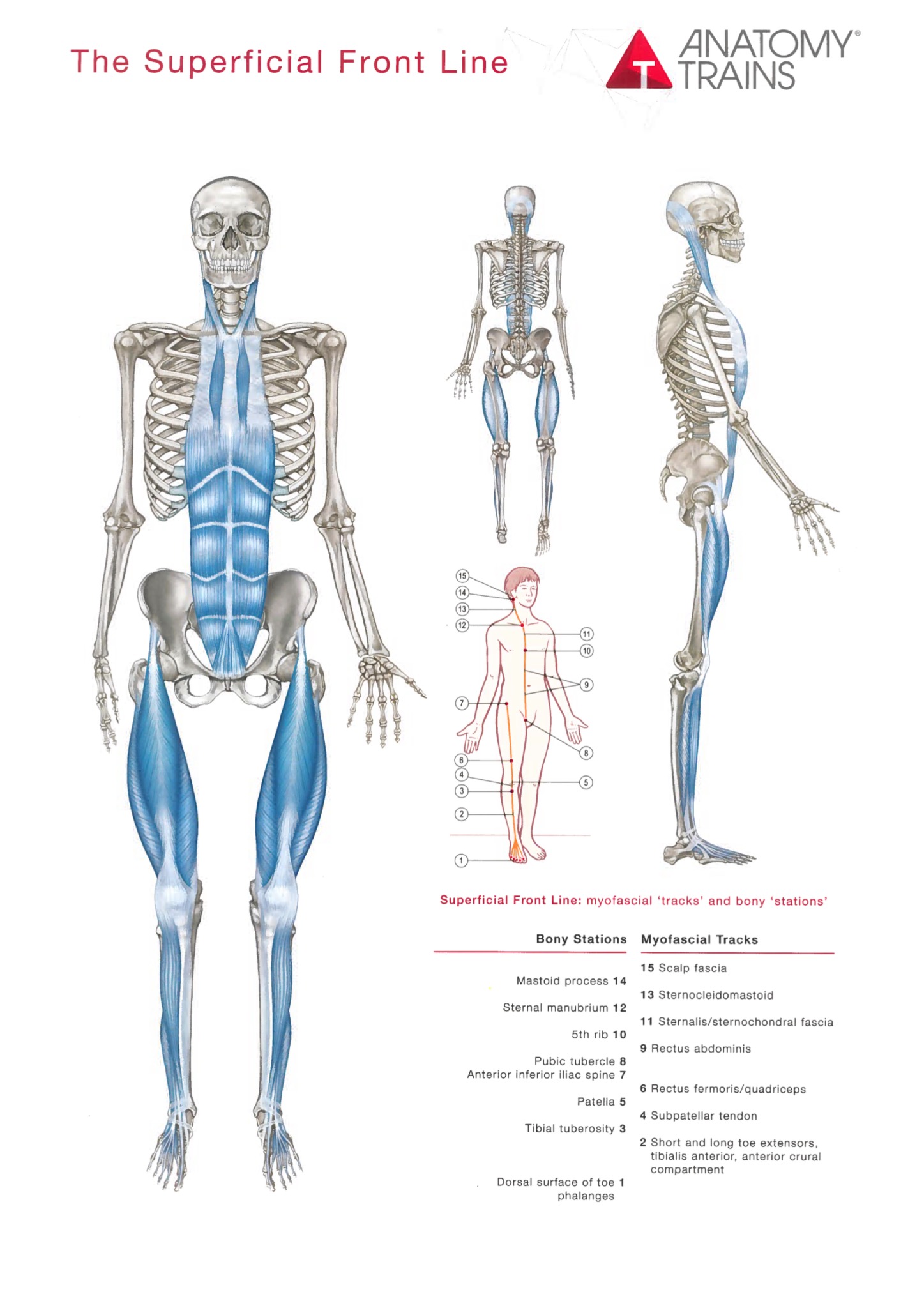
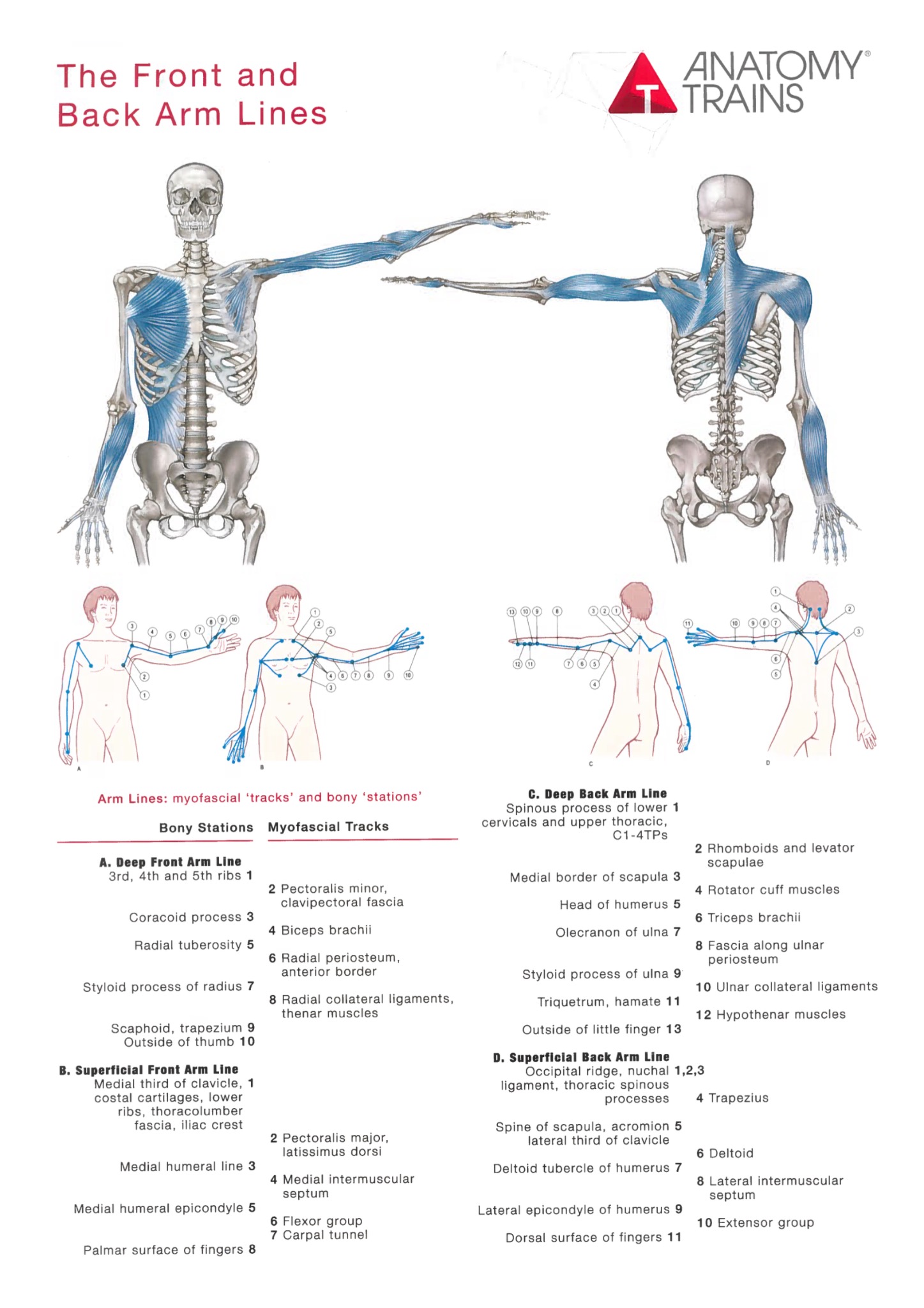
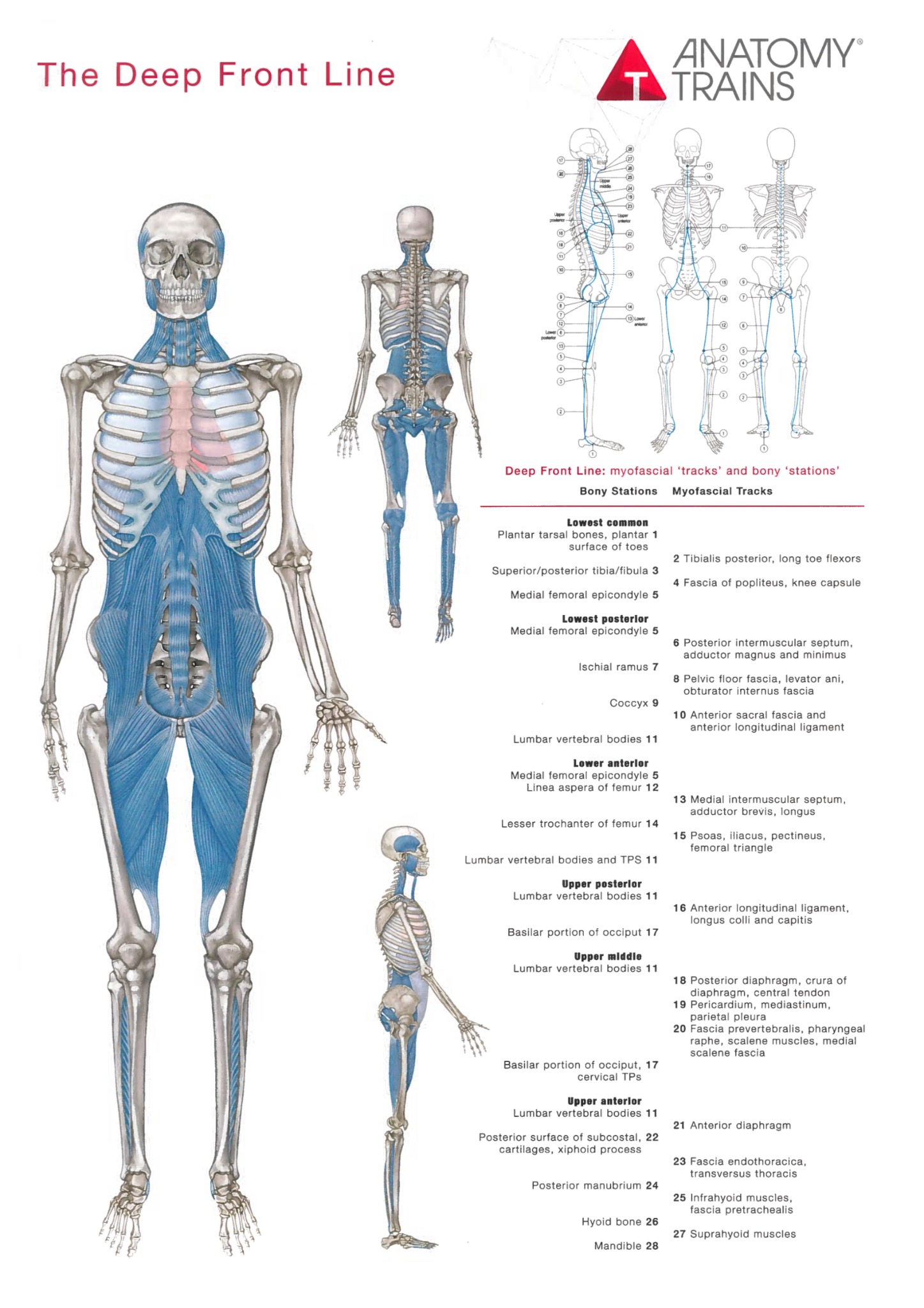
Explore the original Anatomy Trains posters below. Each image opens at full size so you can read the anatomical labels.

Posters by Anatomy Trains®. Original branding and labels are retained. Visit AnatomyTrains.com ↗

A USEFUL FRAMEWORK

A map to guide us.
Your movement leads.

Research has found anatomical continuity along some proposed myofascial chains, with evidence varying between lines. Anatomical connections alone do not establish that a particular exercise will treat pain or produce a specific result.

I use Anatomy Trains as one framework for movement coaching. Your comfort, ability, progress, and goals guide the plan; the diagram is not a diagnosis.

Explore the sources.

Anatomy Trains® is a registered trademark. Diagrams retain their original branding and are credited to their respective rights holders. This page describes Matthew’s use of the model in personal training; it does not imply Anatomy Trains certification, affiliation, or endorsement.
LEARN YOUR BODY. OWN YOUR TRAINING.

Move with purpose.
Stay active for life.

Explore your movement with 1-on-1 personal training
at Fitness First St Leonards.

Book an intro session ↗